The Data-Saturated Athlete: How Real-Time Performance Feedback May Be Eroding the Internal Awareness That Competition Demands
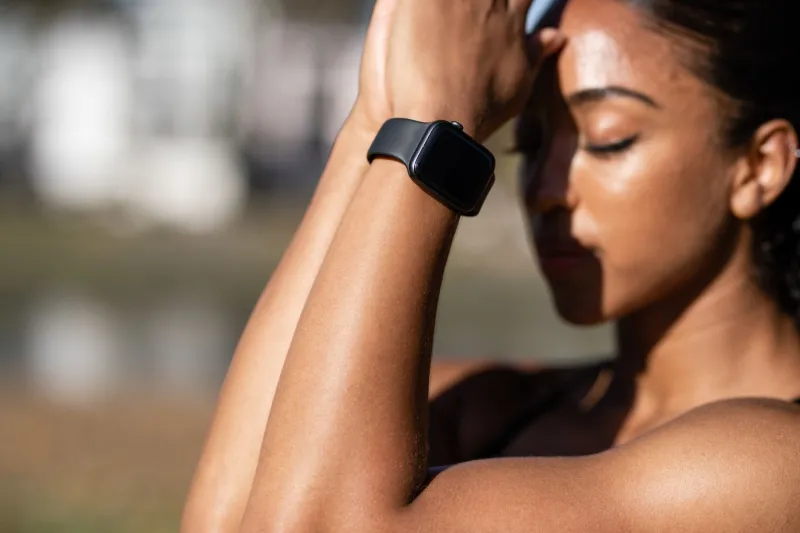
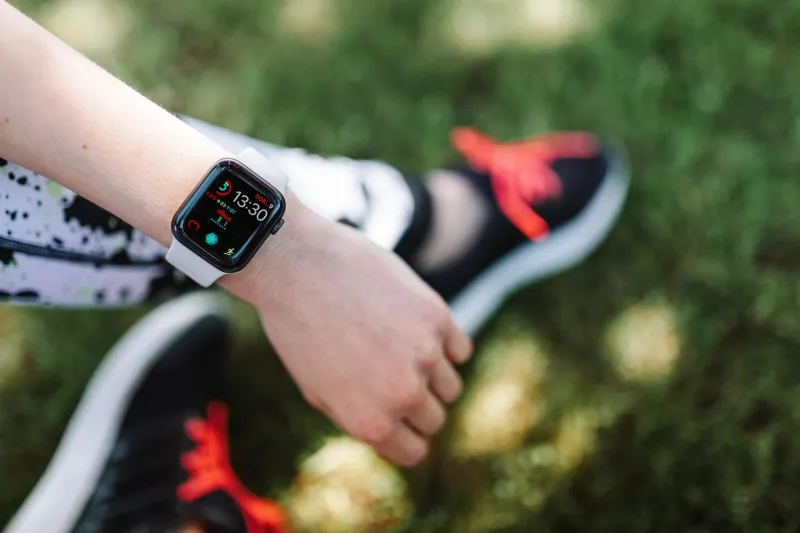
Consider the experience of a competitive runner mid-race. Her watch displays current pace, heart rate, estimated finish time, and a color-coded effort indicator. An earbud delivers periodic audio updates. Her training platform has established target zones for each race segment, and a small vibration alerts her when she drifts outside them. She has access, in real time, to more physiological information than a professional athlete of twenty years ago could have obtained from a full laboratory evaluation.
And yet, when the race reaches its decisive final mile — when the margin between a personal record and a missed target is determined not by data but by the capacity to endure, to push through ambiguity, to make split-second decisions based on internal signals alone — the technology goes silent. Not because it has been turned off, but because competition has outpaced its usefulness. The question worth examining is whether the preceding months of data dependency have prepared her for that moment, or quietly degraded the very faculties it demands.
Proprioception and the Feedback Displacement Effect
Proprioception — the body's internal sense of position, movement, and effort — is not a passive system. It is trained, refined, and maintained through use. Like any sensory capacity, it responds to the demands placed upon it. When those demands are consistently outsourced to external instruments, the internal system may atrophy in ways that are difficult to detect until competition makes them visible.
Sports scientists refer to a related phenomenon as the feedback displacement effect: the tendency for external feedback, when provided consistently and in high volume, to reduce an athlete's reliance on intrinsic sensory information. Research in motor learning has demonstrated this effect across a range of sports and skill domains. A 2016 study published in Frontiers in Psychology found that athletes who received augmented feedback during skill acquisition showed strong performance while feedback was available but demonstrated reduced retention and adaptability when it was withdrawn — a pattern the researchers described as feedback dependency.
The implications for wearable-dependent training are direct. If athletes spend months calibrating effort, pacing, and recovery decisions against real-time external data, they may arrive at competition — where data access is limited, delayed, or simply overwhelmed by the demands of the moment — without the refined internal calibration that performance under pressure requires.
The Cognitive Load Problem
Beyond proprioception, there is a second and perhaps more immediately consequential concern: cognitive load. Attention is a finite resource, and in competitive athletic contexts, its allocation determines outcomes. The decision to monitor an external data stream during training or competition is not merely an informational choice — it is a decision to direct attentional resources away from the competitive environment, the body's internal signals, and the tactical demands of the moment.
Research in attention and performance supports the view that elite athletic execution is characterized by a reduction in conscious, analytic processing rather than an increase in it. Psychologist Gabriele Wulf's constrained action hypothesis, supported by numerous experimental studies, proposes that directing attention toward internal movement mechanics — or, by extension, toward data displays representing those mechanics — disrupts the automatic motor programs that underlie skilled performance. External attentional focus, when directed toward the task's environmental effects rather than the body's own processes, consistently produces superior performance outcomes in motor skill research.
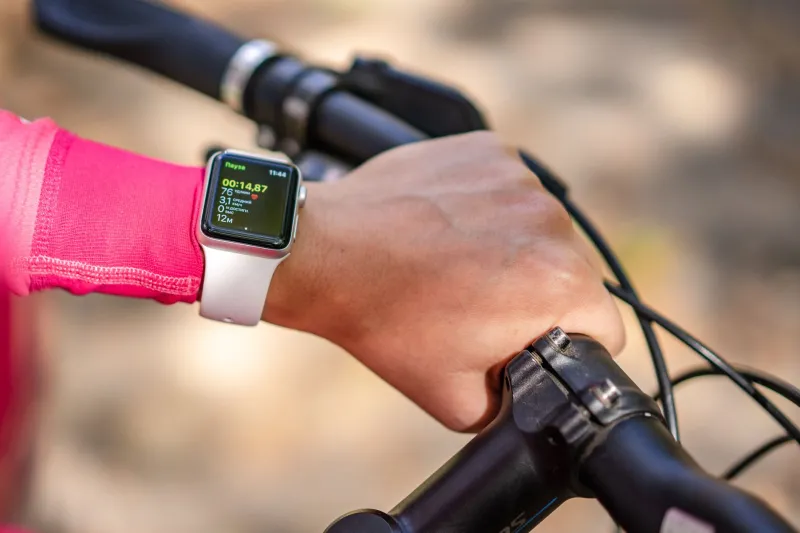
Real-time data feeds occupy exactly the cognitive space that skilled athletic performance requires to be clear. A cyclist monitoring power output, cadence, and heart rate simultaneously is allocating executive resources to data interpretation rather than tactical positioning, terrain reading, or competitive response. The data may be accurate. The cost of accessing it, in that moment, may still be net negative.
How Technology Shapes Athletic Identity
There is a cultural dimension to this problem that deserves acknowledgment. In American fitness and sports culture, data fluency has become a marker of serious athletic commitment. Athletes who train without wearables are increasingly perceived — and may perceive themselves — as operating below the standard of evidence-based practice. Tracking everything has acquired a moral valence: it signals dedication, discipline, and scientific sophistication.
This cultural framing creates a structural barrier to the kind of technology-free training periods that might allow proprioceptive and attentional capacities to develop without external scaffolding. Athletes who recognize the value of disconnected training sessions may nonetheless feel professionally or socially obligated to maintain their data streams — a dynamic that mirrors, in its own way, the autonomic monitoring paradox described in other areas of performance science.
Coaches working with collegiate and professional athletes in the United States have begun to document this phenomenon anecdotally. Athletes who have trained extensively with GPS pace guidance, for example, frequently report difficulty executing accurate effort-based pacing when devices malfunction or are unavailable during competition. The internal pacing mechanism, undertrained relative to external pacing feedback, produces inconsistent and often erratic results under pressure.
Reclaiming Embodied Awareness Without Abandoning the Data
The argument here is not that technology should be abandoned. The performance insights available through contemporary wearable platforms — longitudinal HRV trends, training load quantification, sleep architecture analysis — have genuine value when interpreted correctly and applied with appropriate skepticism. The problem is not the existence of data but the terms under which athletes engage with it.
A more effective model treats data as a retrospective analytical tool rather than a real-time operational crutch. Training sessions conducted without active device monitoring — what some coaches have begun calling "naked training" blocks — allow athletes to practice generating and trusting internal effort calibrations, pacing judgments, and recovery assessments. Data from these sessions can still be collected passively and reviewed afterward, preserving the longitudinal record without displacing in-the-moment internal awareness.
Periodic technology-free training phases, structured deliberately into annual planning, serve a function analogous to deload weeks in strength programming: they allow an undertrained capacity — in this case, embodied athletic awareness — to recover and develop relative to the dominant training stimulus.
Coaches and sports psychologists working at the intersection of performance technology and motor learning have also begun advocating for what might be called attentional periodization: systematic variation in the degree of external feedback provided during training, designed to develop both data-informed and internally-guided performance modes rather than defaulting exclusively to one.
The Athlete the Data Cannot See
Competition has always demanded something that instruments cannot fully capture: the capacity to respond to the present moment with the full resources of an integrated, internally-aware body. Data can inform preparation. It cannot replace the kinesthetic intelligence that emerges from years of attending carefully to what the body is actually doing, feeling, and signaling.
The athletes who will navigate the next decade of performance technology most successfully will likely be those who develop a disciplined relationship with their data — using it selectively, interpreting it critically, and protecting the periods of internal attentiveness that no device can replicate. In a culture that has made tracking everything feel like a prerequisite for progress, that discipline may be the most undervalued training adaptation available.