The Athlete's Guide to Sleep Position: How You Lie Down May Determine How You Perform
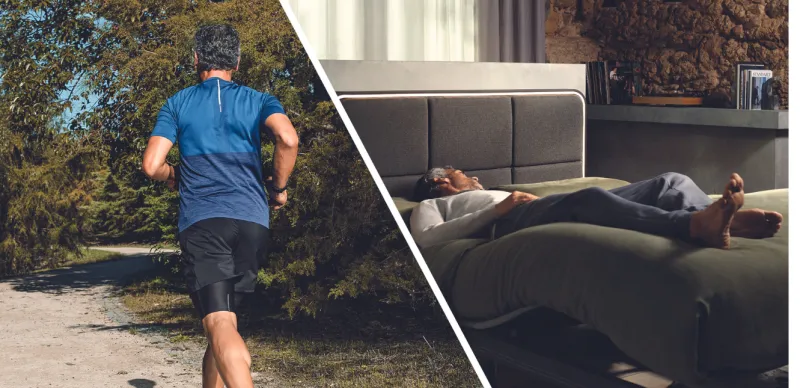
Photo: athlete sleeping recovery bedroom side sleeping position sports, via shop.ergomotion.com
Athletes in the United States collectively spend billions of dollars annually on recovery tools—compression garments, ice baths, percussion therapy devices, and an ever-expanding catalog of supplements. Yet one of the most fundamental recovery variables—the position in which the body rests for seven to nine hours each night—receives comparatively little systematic attention. Sleep science and biomechanical research are beginning to fill that gap, and the findings carry practical implications for anyone serious about next-day performance.
This guide synthesizes current evidence on how sleeping position affects muscular recovery, spinal health, lymphatic clearance, and hormonal function, offering position-specific recommendations tailored to different body types, injury histories, and training modalities.
Why Sleeping Position Is a Performance Variable
Sleep architecture—the cycling pattern through light sleep, deep sleep, and REM phases—is the primary determinant of recovery quality. During slow-wave (deep) sleep, the body releases the majority of its growth hormone, a critical mediator of tissue repair and muscle protein synthesis. REM sleep supports cognitive consolidation, motor learning, and emotional regulation, all of which have documented relevance to athletic performance.
Sleeping position interacts with this architecture in several ways. Positional discomfort, pain, or restricted breathing can fragment sleep continuity, reducing time spent in restorative stages. Spinal misalignment during sleep can generate low-grade musculoskeletal tension that, while not acutely painful, may contribute to suboptimal movement quality the following day. Additionally, certain positions appear to influence lymphatic and glymphatic clearance—the brain's nocturnal waste-removal system—which has downstream implications for cognitive sharpness and reaction time.
Position 1: Back Sleeping (Supine)
Who it benefits most: Athletes with lower back sensitivity, those recovering from shoulder injuries, and individuals with symmetrical body builds.
Back sleeping is frequently cited by physical therapists and orthopedic specialists as the most mechanically neutral position for spinal alignment. When the spine is supported in its natural curvature—cervical, thoracic, and lumbar—muscular tension along the posterior chain is minimized. For athletes who place significant compressive load on the spine during training (powerlifters, Olympic weightlifters, and CrossFit competitors, for example), supine sleeping may offer meaningful decompression during overnight hours.
Research published in the Journal of Physical Therapy Science has associated back sleeping with reduced spinal pain and improved perceived sleep quality in populations with lower back complaints. From a hormonal standpoint, supine positioning does not appear to restrict thoracic expansion, supporting unobstructed diaphragmatic breathing and, by extension, parasympathetic nervous system activation during sleep—a state conducive to recovery.
Practical optimization: Place a firm pillow beneath the knees to reduce lumbar lordosis. Choose a medium-firm mattress that supports the natural spinal curve without allowing the hips to sink excessively. A cervical support pillow—one contoured to maintain the neck's natural curve—is preferable to a standard flat pillow.
Caution: Back sleeping is generally contraindicated for individuals who snore significantly or who have been diagnosed with obstructive sleep apnea. Airway obstruction during sleep dramatically reduces sleep quality and, consequently, recovery capacity.
Position 2: Side Sleeping (Lateral)
Who it benefits most: Endurance athletes, individuals with sleep apnea or snoring tendencies, and those in later stages of pregnancy.
Lateral sleeping is the most common position among US adults and carries a well-supported evidence profile for specific populations. From an airway perspective, side sleeping maintains tongue and soft palate positioning that reduces upper airway collapse—a significant advantage for athletes who may already experience mild airway compromise due to nasal congestion following heavy training loads.
A notable body of research has investigated lateral sleeping in the context of glymphatic clearance. A landmark 2015 study published in the Journal of Neuroscience found that the glymphatic system—responsible for clearing metabolic waste products, including amyloid-beta proteins, from the brain—operates most efficiently during lateral sleep. For athletes under high cognitive and physical demand, optimized glymphatic function may support sharper decision-making and faster reaction times the following day.
Left versus right side: The distinction matters more than most athletes realize. Left-side sleeping is associated with improved lymphatic drainage toward the thoracic duct and may reduce acid reflux symptoms—relevant for athletes who consume high-calorie, high-protein diets in the evening. Right-side sleeping, conversely, has been linked in some studies to increased acid reflux and may place mild compressive load on the liver.
Practical optimization: Maintain a neutral spinal position by placing a firm pillow between the knees to prevent hip rotation and reduce iliotibial band tension—a common concern for runners and cyclists. The head pillow should be thick enough to fill the space between the ear and the mattress, keeping the cervical spine aligned with the thoracic spine. Avoid tucking the chin to the chest, which compresses the cervical vertebrae.
Position 3: Stomach Sleeping (Prone)
Who it benefits most: Almost no one from a biomechanical standpoint.
Prone sleeping is the position most consistently associated with adverse musculoskeletal outcomes in the research literature. To breathe while lying face-down, the sleeper must rotate the cervical spine to one side—often for hours at a time. This sustained unilateral rotation places asymmetric compressive and tensile load on cervical musculature and facet joints, which can manifest as neck stiffness, reduced rotational range of motion, and referred pain into the shoulder girdle.
For athletes whose sport demands cervical mobility—swimmers, wrestlers, baseball players, and tennis competitors—chronic prone sleeping may quietly erode movement quality in a way that is difficult to attribute to a single cause.
Additionally, prone positioning places the lumbar spine in relative extension and compresses the abdominal contents, which can restrict diaphragmatic excursion and subtly impair breathing efficiency during sleep.
If prone sleeping is unavoidable: Use the thinnest pillow possible—or no pillow at all—beneath the head to minimize cervical rotation angle. A thin pillow placed under the lower abdomen can partially reduce lumbar extension stress. Gradually transitioning to side sleeping using a body pillow as a positional anchor is a strategy endorsed by many physical therapists.
Mattress Firmness and Athletic Body Type
Sleeping position cannot be fully optimized without accounting for the surface on which it occurs. Mattress firmness interacts with body composition in ways that are biomechanically meaningful.
Athletes with higher lean body mass—particularly those with broad shoulders and narrow hips, common in upper-body dominant sports—often require a softer surface when side sleeping to allow the shoulder to sink sufficiently for spinal alignment. Conversely, athletes with greater hip width relative to shoulder width may find a medium-firm surface more supportive in lateral positions. Back sleepers with significant muscle mass through the posterior chain generally benefit from medium-firm mattresses that prevent excessive lumbar sinking.
A 2015 study in Sleep Health found that medium-firm mattresses were associated with improved sleep quality and reduced musculoskeletal pain compared to softer alternatives across a diverse adult population—a reasonable default recommendation for athletes without specific positional requirements.
Hormonal Considerations
Growth hormone secretion peaks during the first few slow-wave sleep cycles, typically occurring within the first three hours of sleep onset. Any positional discomfort that fragments sleep during this window disproportionately reduces growth hormone output, with downstream effects on overnight muscle protein synthesis and tissue repair.
For athletes training at high volumes—particularly those following two-a-day schedules common in collegiate and professional programs—protecting the integrity of early-night sleep architecture by optimizing positional comfort is not a trivial concern. It is a direct intervention in the hormonal environment of recovery.
Actionable Recommendations by Training Type
- Strength and power athletes: Prioritize back sleeping with knee support to decompress the lumbar spine. Invest in a medium-firm mattress and a cervical contour pillow.
- Endurance athletes (runners, cyclists, triathletes): Left-side sleeping with a knee pillow to reduce IT band tension. Monitor for hip rotation, which can stress the piriformis and contribute to sciatic symptoms.
- Combat sports and contact athletes: Side or back sleeping preferred. Prone sleeping is particularly inadvisable given the cervical demands of wrestling, judo, and football.
- Athletes with active shoulder injuries: Back sleeping with arm supported along the torso is preferable to lateral compression on the affected side.
Final Assessment
Sleeping position is not the most glamorous performance variable, and it lacks the marketing appeal of a new recovery device or supplement stack. What it offers instead is something more valuable: a zero-cost, nightly intervention that, when optimized, supports spinal health, hormonal output, airway patency, and glymphatic clearance simultaneously. For athletes committed to evidence-based recovery, the question is not whether sleep position matters—the research confirms that it does—but whether they are willing to apply that knowledge with the same intentionality they bring to their training.
