Cold Exposure and the Athlete: Why the Ice Bath Works for Some and Undermines Others
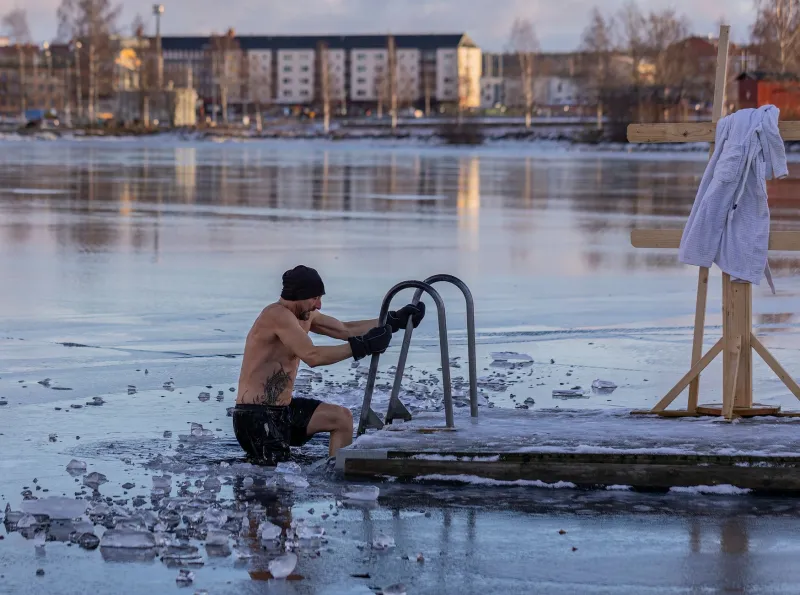
Scroll through any elite athlete's social media feed, and you are likely to encounter the now-iconic image: a composed competitor submerged to the shoulders in an ice bath, projecting the stoic discipline that has come to define modern performance culture. Cold water immersion and cryotherapy chambers have migrated from professional locker rooms into commercial gyms, biohacking studios, and suburban backyards across the United States. The cultural message is straightforward — cold exposure makes you harder, faster, and more recovered.
The physiological message is considerably more nuanced.
Research accumulated over the past two decades increasingly suggests that the relationship between deliberate cold exposure and athletic adaptation is not universal. The same thermal stress that accelerates recovery and enhances performance markers in one athlete may, in another, suppress the very molecular signaling cascades that drive tissue repair and long-term strength development. The difference, as is so often the case in performance science, lies within the individual.
The Biology of Cold Stress: What Is Actually Happening
When the body is exposed to cold water or cryogenic air, a coordinated physiological cascade is initiated. Core temperature drops, triggering vasoconstriction in peripheral tissues and a sympathetic nervous system surge that elevates norepinephrine — sometimes by 200 to 300 percent above baseline, according to research from the University of Tromsø. Heart rate variability shifts, metabolic rate increases, and a family of protective proteins known as heat shock proteins (HSPs) is upregulated in response to cellular stress.
These responses are real, measurable, and, under the right conditions, genuinely beneficial. Reduced peripheral edema, attenuated delayed-onset muscle soreness, and improved subjective recovery perception are among the documented short-term advantages. The problem is that these same mechanisms carry trade-offs that are not evenly distributed across all athlete populations.
The Heat Shock Protein Variable
Heat shock proteins are molecular chaperones — proteins whose primary function is to protect cellular machinery under stress conditions and facilitate tissue repair. Cold exposure upregulates specific HSP isoforms, particularly HSP70 and HSP90, which play roles in protein folding and the protection of muscle fibers during recovery.
However, genetic polymorphisms in the genes encoding these proteins create meaningful variation in how robustly individuals respond to thermal stress. Research published in the Journal of Applied Physiology has identified single nucleotide polymorphisms in the HSPA1A gene that alter HSP70 expression levels following cold challenge. Athletes carrying certain variants may experience a significantly blunted HSP response, meaning that the cold exposure intended to accelerate recovery is, in their case, triggering less cellular protection than anticipated — not more.
This is not a fringe finding. It reflects a broader principle in exercise genomics: the same environmental stressor produces divergent molecular outcomes depending on the genetic architecture of the individual exposed to it.
Brown Adipose Tissue: The Thermogenic Wildcard
Brown adipose tissue (BAT) is metabolically active fat whose primary function is thermogenesis — heat generation through the uncoupling of mitochondrial respiration. Unlike white adipose tissue, BAT burns energy rather than storing it, and cold exposure is its primary activator.
The relevance to athletes is this: individuals with higher BAT density and activity adapt to cold exposure more efficiently, thermoregulate more effectively during repeated cold challenges, and appear to derive greater metabolic benefits from deliberate cold stress protocols. Research using positron emission tomography has demonstrated that BAT quantity and activity vary substantially across individuals and are influenced by both genetic predisposition and prior cold acclimation history.
An athlete with robust BAT activity will respond to an ice bath protocol quite differently than a lean endurance athlete with minimal BAT reserves. The former may experience genuine metabolic and autonomic benefits; the latter may simply be generating a significant physiological stress response with limited adaptive return.
The Anabolic Signaling Problem
Perhaps the most consequential and underappreciated finding in cold exposure research concerns its interaction with anabolic signaling — the molecular processes that drive muscle protein synthesis following resistance training.
A landmark study published in the Journal of Physiology by Roberts and colleagues demonstrated that cold water immersion performed after resistance training significantly attenuated long-term gains in muscle mass and strength compared to active recovery. The mechanism appears to involve suppression of mTORC1 signaling and satellite cell activity — both of which are essential to the hypertrophic response. Cold-induced vasoconstriction reduces nutrient delivery to recovering muscle tissue, and the reduction of post-exercise inflammation — often cited as a benefit — may actually remove a necessary stimulus for muscle adaptation.
This finding carries significant practical implications. For athletes whose primary goal is strength or hypertrophy development, routine post-training cold immersion may be actively working against their long-term adaptation. The anti-inflammatory effect that feels beneficial in the short term is, in this context, suppressing a biological process the body needs to grow stronger.
Autonomic Reactivity and Individual Cold Tolerance
The autonomic nervous system mediates much of the body's response to cold stress, and the degree of sympathetic reactivity varies considerably between individuals. Athletes with high baseline sympathetic tone — often high-intensity competitors in combat sports, American football, or sprint disciplines — may experience cold exposure as an additive stressor on an already taxed system rather than a restorative intervention.
In contrast, endurance athletes, who typically exhibit higher parasympathetic dominance and greater autonomic flexibility, tend to respond more favorably to cold immersion as a recovery modality. Their nervous systems are better positioned to absorb the sympathetic surge of cold stress and return to baseline efficiently.
Heart rate variability data, increasingly accessible through wearable technology, may offer a practical proxy for assessing autonomic readiness before committing to cold exposure on any given day.
Which Athlete Actually Benefits?
Synthesizing the available evidence, a clearer picture of the cold-responsive athlete phenotype begins to emerge. Deliberate cold exposure appears most beneficial for athletes who:
- Prioritize endurance performance or sport-specific conditioning over maximal strength development
- Have documented or suspected high BAT activity, often reflected in a history of easy cold acclimation
- Are in competition phases where short-term recovery is prioritized over long-term adaptation
- Exhibit parasympathetically dominant autonomic profiles
- Are not in active hypertrophy or strength-focused training blocks
Conversely, athletes in strength and power development phases, those with genetic variants limiting HSP response, and those already operating under high systemic stress loads may find that cold exposure impairs rather than enhances their trajectory.
A More Individualized Approach
The cold plunge trend is not without merit — but it is being applied with a uniformity that the underlying science does not support. The most rational approach for performance-focused athletes is to treat cold exposure as a context-dependent tool rather than a universal protocol.
Timing matters: cold exposure separated from resistance training by several hours, or reserved for competition recovery rather than training-phase recovery, preserves more of the anabolic signaling that chronic cold immersion can blunt. Frequency matters: daily cold plunges may be excessive for athletes in whom the stress load outweighs the adaptive return. And individual response tracking — through performance metrics, HRV data, and subjective recovery scores — remains the most reliable guide to whether a given protocol is serving or undermining a specific athlete's goals.
The ice bath is not inherently virtuous. Like every tool in the performance toolkit, its value is entirely dependent on how precisely it is matched to the individual holding it.